Two ways to stop drowning in files.
One sorts what you keep, one clears what you don’t need. Both run on your machine, both ask before they move anything, and neither one ever really deletes a thing. Everything lands somewhere you can still get back.
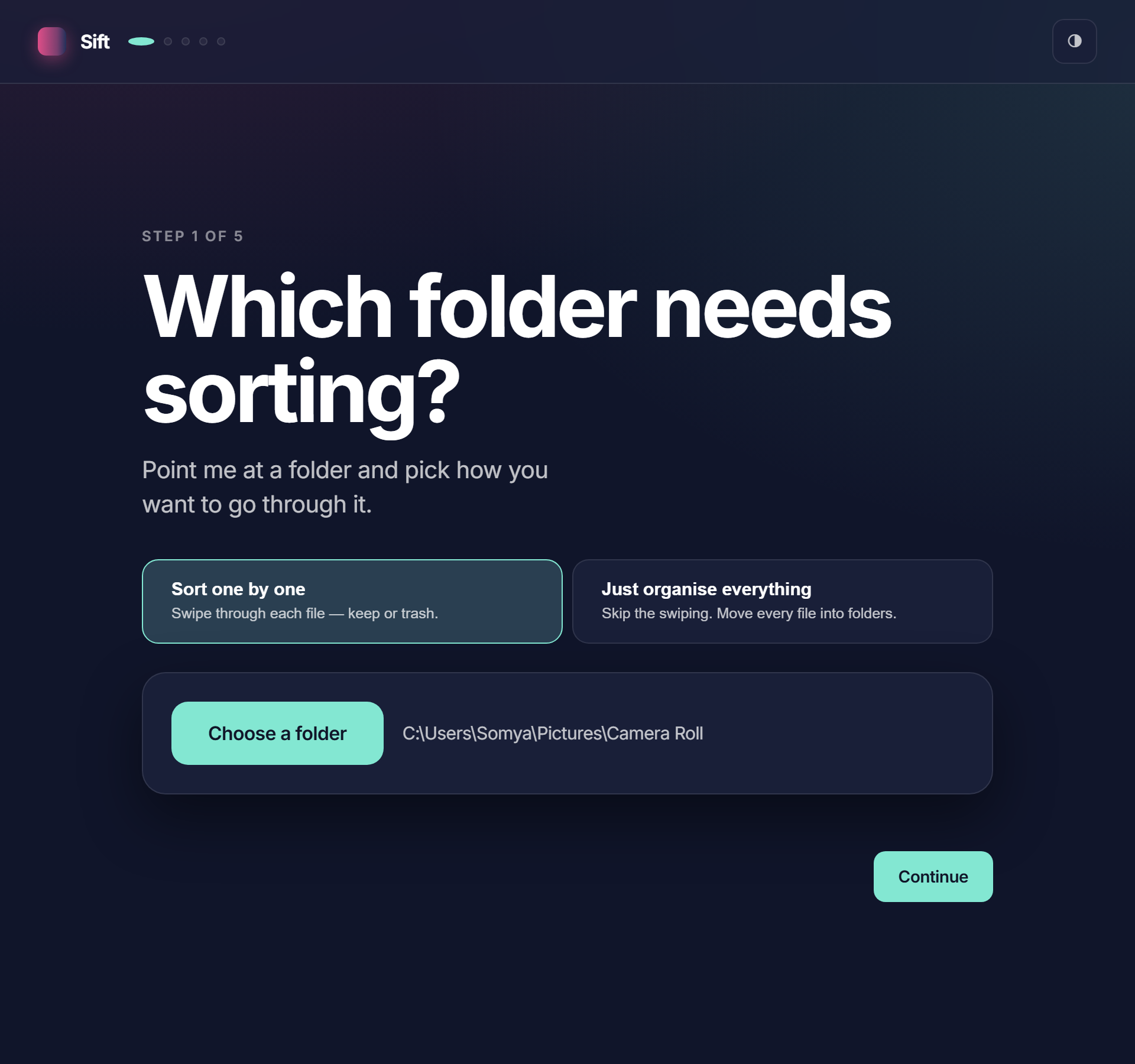
Tinder for the files you keep avoiding.
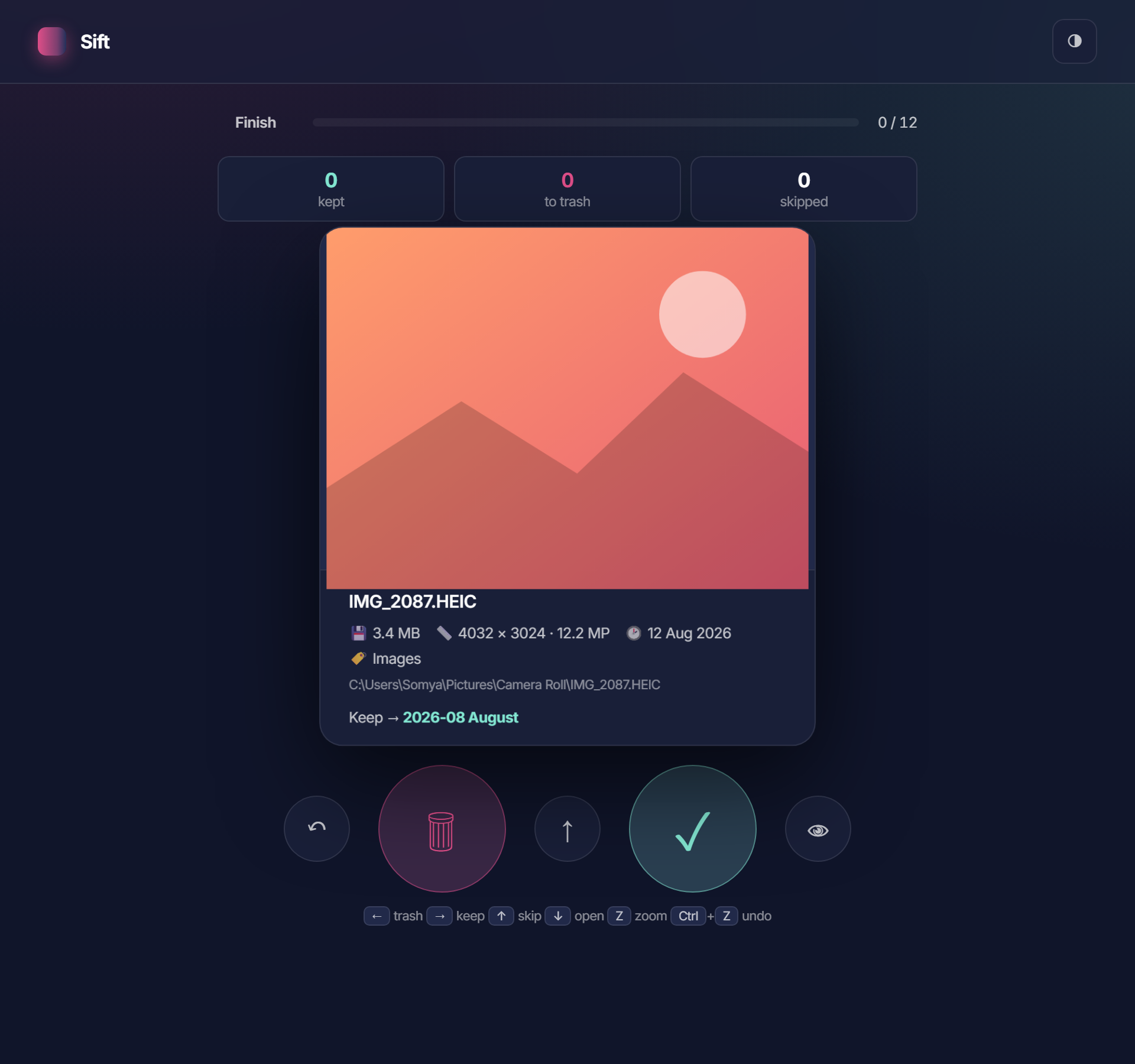
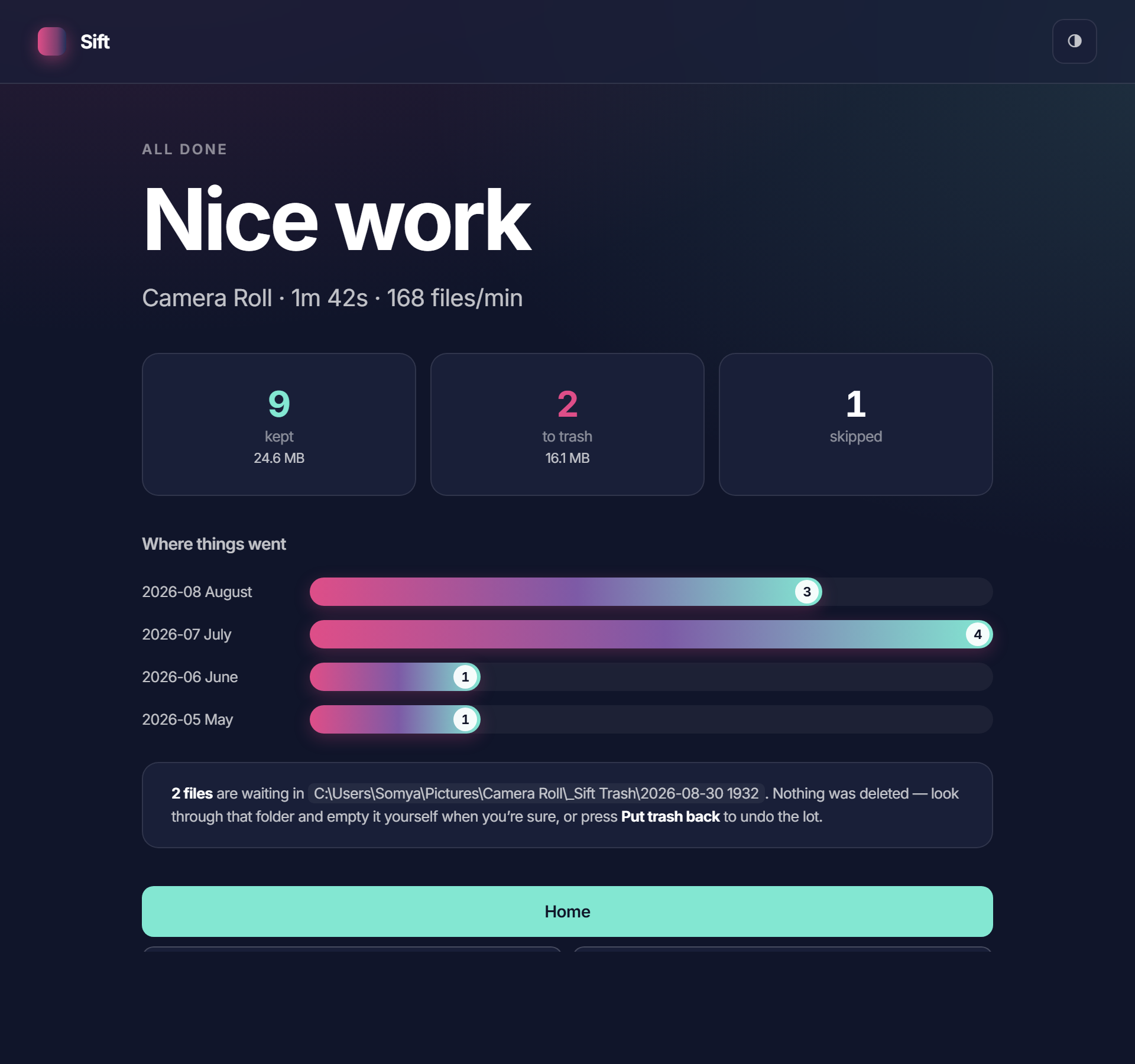
Point Sift at a folder and it shows you one file at a time: full preview, size, date, where it’s headed. Swipe right to keep, left to trash, up to skip. Keepers settle into folders you chose upfront; nothing’s gone until you empty the trash folder yourself.
A folder of 500 photos is 500 separate decisions: open it, look, decide, drag it somewhere. Most people get through the first forty and give up.
Rough math, not a measurement (neither app phones home). Reviewing and dragging one file by hand runs about 8 to 10 seconds once you count opening it, deciding, and moving it. A swipe or an arrow key is closer to 2. Across 500 files, that’s roughly 75 minutes of clicking against about 15.
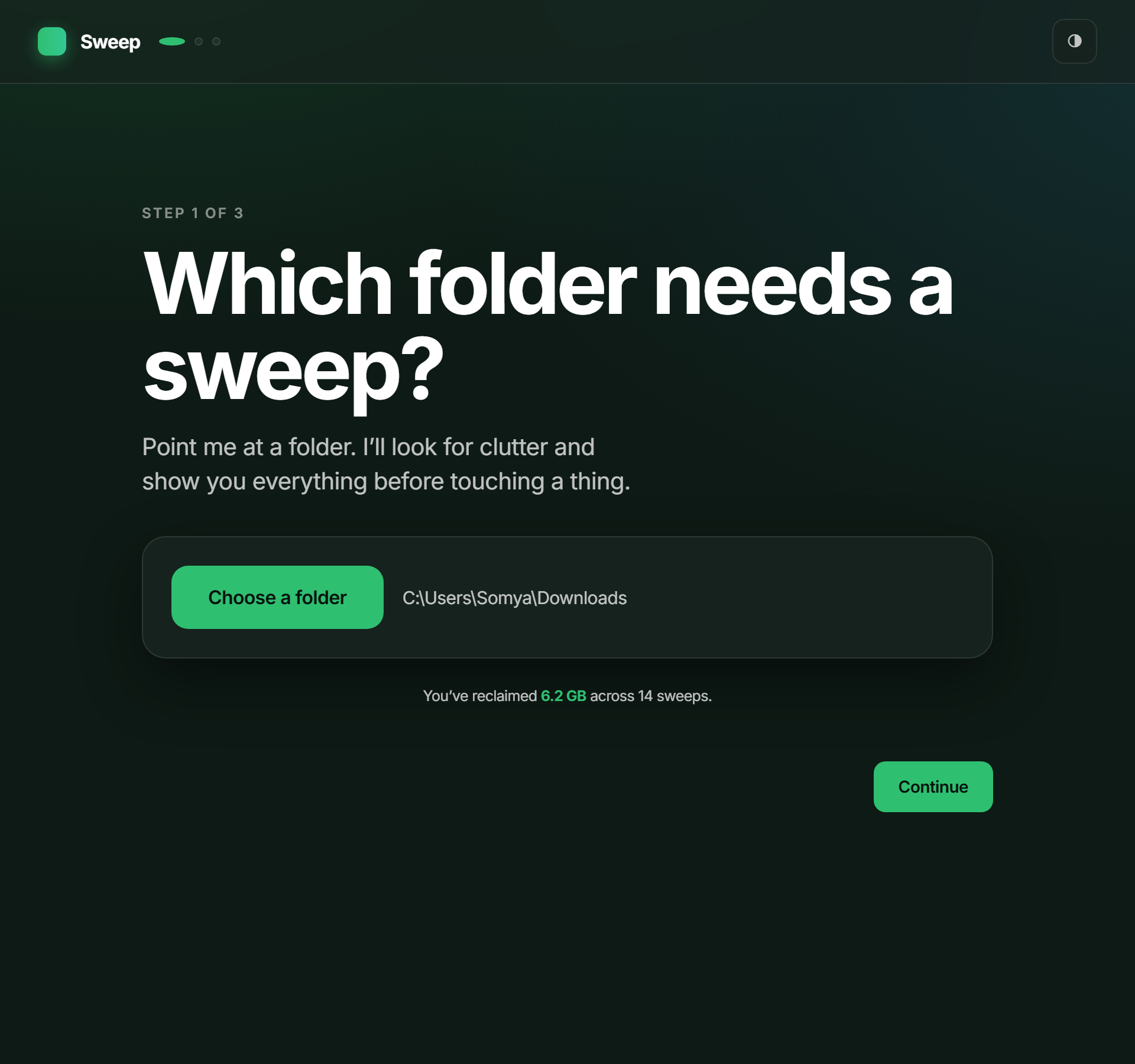
The clutter you never meant to keep.
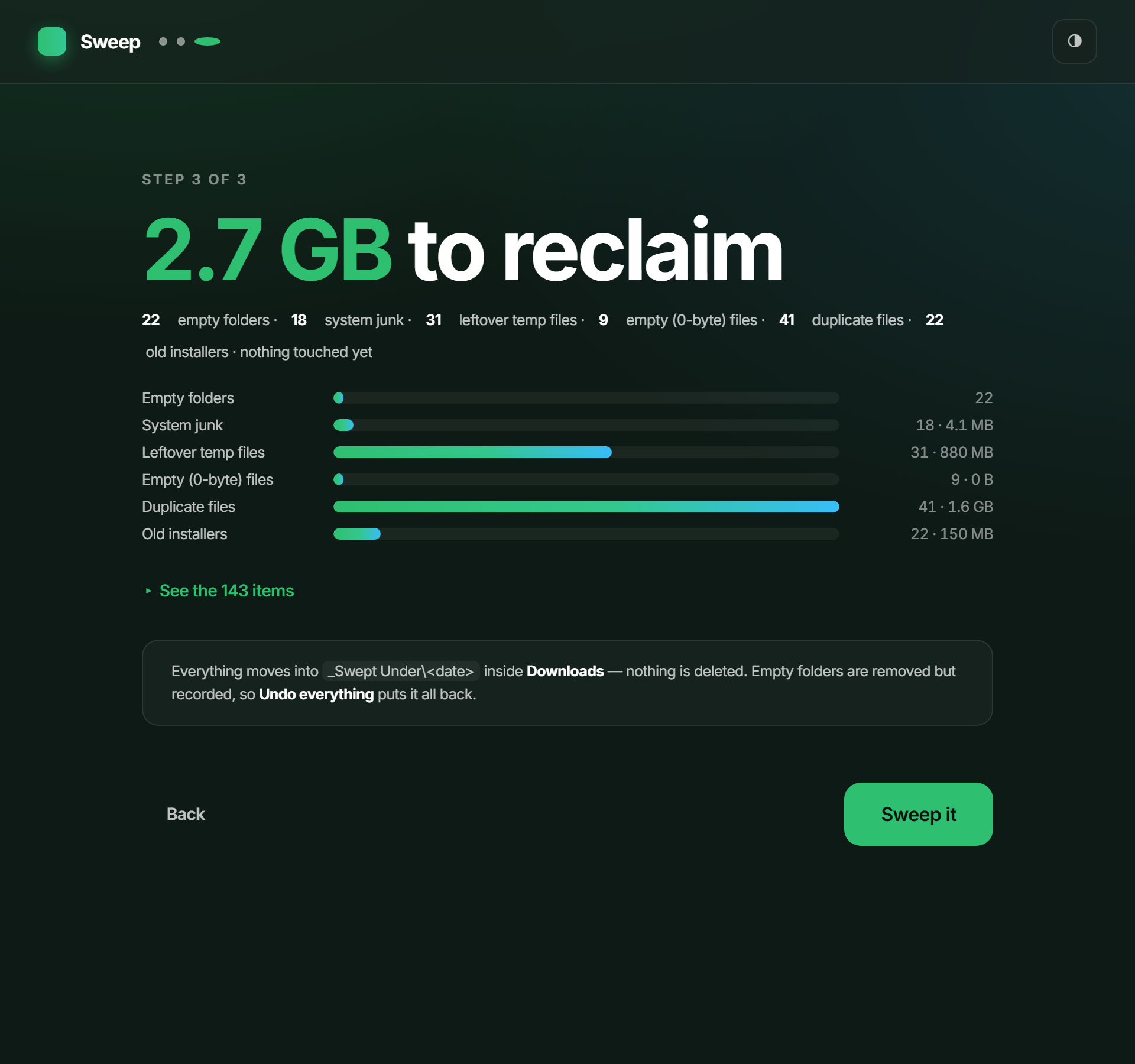
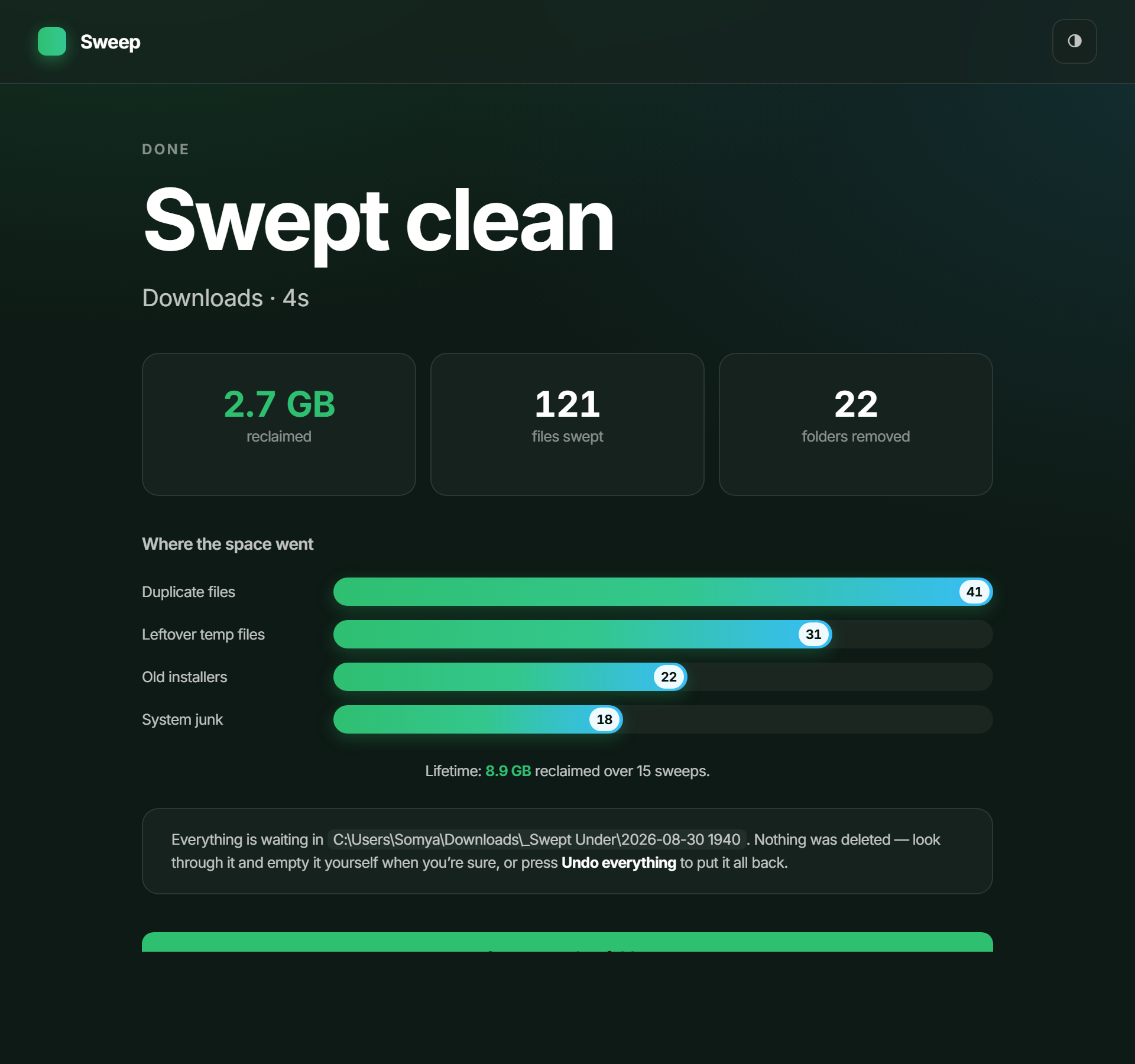
Empty folders, Thumbs.db, half-finished downloads, old installers, exact
duplicates. Sweep finds it all, shows you the full plan and the size before it
moves a single file, and only acts once you say go.
Clutter never announces itself. An empty folder, a stray Thumbs.db, a
near-duplicate photo. Finding what’s safe to remove means opening every
folder and sorting by size, by hand.
Rough math, not a measurement: a Downloads folder left alone for a year easily holds a few hundred stray files across dozens of sub-folders. Hunting through that by hand, checking each candidate before deleting it, runs 20 to 30 minutes, if you ever get around to it. Sweep’s scan takes under a minute and shows every byte before it moves anything.